Best Focal Reducers for Imaging the Andromeda Galaxy with a Small APO
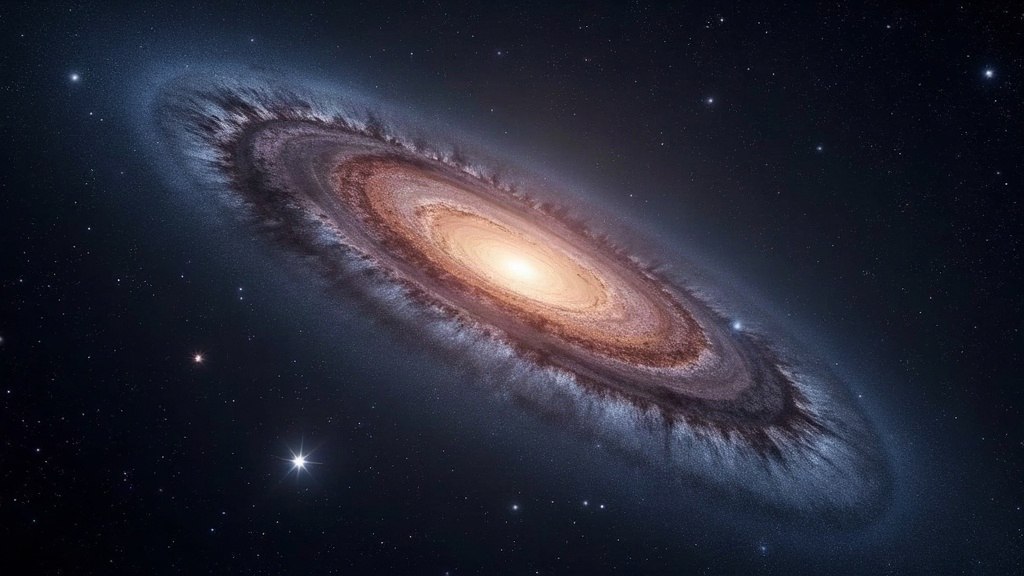
Getting Andromeda to Fit: Reducer Options for Small APO Refractors
If you’re pointing a small apochromatic refractor at the Andromeda Galaxy (M31), a focal reducer might be the single best upgrade you can buy. It shortens your effective focal length, speeds up the system (lower f-ratio), and widens the field enough that Andromeda’s full 3-degree sprawl, satellite galaxies M32 and M110 included, actually fits in one frame instead of spilling off the edges. Below is a rundown of the most common reducer options for 60-100mm APOs, and which one tends to actually deliver on M31.
Why Andromeda Needs a Reducer in the First Place
Andromeda is huge. We’re talking roughly six times the apparent diameter of the full moon, which sounds almost absurd until you try to frame it. A typical small APO shooting at its native focal length (say 500-600mm) on a full-frame or APS-C sensor will usually crop too tight, slicing off the outer spiral arms right where some of the faintest, most interesting structure lives. A reducer fixes two things at once:
- Wider field: Cuts focal length by a factor of 0.7x to 0.8x, which is often just enough to pull the whole galaxy, plus its two companions, into the frame.
- Faster f-ratio: More photons land on each pixel per second, so you either shorten your subs or squeeze better signal-to-noise out of the same session length. For Andromeda’s faint, extended dust lanes, that extra signal matters a lot.
The Main Contenders
1. Dedicated 0.8x Reducer/Flattener (APO-Specific)
Most APO makers (William Optics, Astro-Tech, Askar, Stellarvue) sell a reducer-flattener matched specifically to their own optical formula. These consistently come out on top in testing, and for good reason:
- The field flatness is engineered around that exact scope’s curvature, not a generic approximation.
- Coma and chromatic aberration stay minimal.
- Backfocus tolerance is tight, usually around 55-56mm, so spacing needs to be accurate (not “close enough”).
Take a 72mm f/6 APO: add this reducer and you land at roughly f/4.8 with a ~345mm focal length. That’s enough to frame all of Andromeda with room left over at the edges.
2. Universal 0.8x Reducers (Riccardi, TS-Optics)
These work across different APO brands and focal ratios, usually with some adjustable spacing so you can fine-tune the flatness yourself. If your scope’s manufacturer doesn’t sell a dedicated unit, this is the sensible fallback.
- Pros: Flexible, generally cheaper, and still usable if you switch scopes down the road.
- Cons: More trial and error on backfocus. Get the spacing off by even 2-3mm and you’ll see mild star elongation creeping into the corners.
3. 0.7x “Hyperstar-style” Reducers
Rarer on small APOs, but they do exist for some fast doublets. These drop the f-ratio aggressively, something like f/6 down to f/4.2, which can cut exposure times dramatically.
- Pros: The fastest option on this list, great if you’re shooting narrowband or fighting light pollution and every minute of exposure counts.
- Cons: Field curvature gets noticeably worse toward the edges. You’ll typically need a sensor-specific flattener paired in, and collimation has to be spot-on.
4. No Reducer (Native Focal Length + Mosaic)
Some imagers skip reducers altogether and shoot a 2 or 3-panel mosaic at native focal length instead, trading field of view for resolution on the core and dust lanes. It’s not really a reducer at all, but it’s worth mentioning as the “maximum detail over maximum field” alternative.
Real-World Performance Differences
A side-by-side test with a 72mm f/6 APO on an APS-C camera turned up some clear differences:
- Dedicated 0.8x reducer: M31, M32, and M110 all fit in frame, stars stayed round into the corners, and exposure time dropped by roughly 25% for the same SNR.
- Universal 0.8x reducer: Comparable field and speed gains, but corner stars stretched slightly until backfocus was dialed in to within half a millimeter. Took some fiddling.
- 0.7x reducer: Wide enough field, but edge stars distorted visibly without a carefully tuned spacer stack. Really best for imagers who don’t mind troubleshooting their optical train.
- No reducer (mosaic): The sharpest core detail and dust lane structure of the bunch, but it cost roughly 3x the total exposure time, plus the extra work of stitching panels together in post.
What to Check Before Buying
- Backfocus spec: Match it exactly. Even 1-2mm of error at the sensor will wreck corner sharpness.
- Thread compatibility: M48/M54 threads show up on most modern APOs, but double-check your camera’s adapter chain actually fits that thread size.
- Sensor size: Full-frame sensors expose field curvature flaws much faster than APS-C does, which is exactly why dedicated reducers matter more if you’re shooting full-frame.
- Reviews for your exact scope model: Flatness varies by optical design, so it’s worth digging through Cloudy Nights or AstroBin threads for people using your specific APO before you commit to a purchase.
Final Thoughts
For shooting Andromeda on a small APO, a manufacturer-matched 0.8x reducer-flattener is the safer bet. It gives you wide field, extra speed, and clean corner-to-corner stars without a lot of setup headaches. Universal reducers work fine too, as long as you’re willing to spend some time nailing the backfocus. The 0.7x units are really for imagers chasing maximum speed who don’t mind extra fuss. Whatever you pick, get that backfocus distance right. It matters more than whatever brand name is printed on the reducer.