Why Does My Equatorial Mount Motor Stall on Winter Nights?
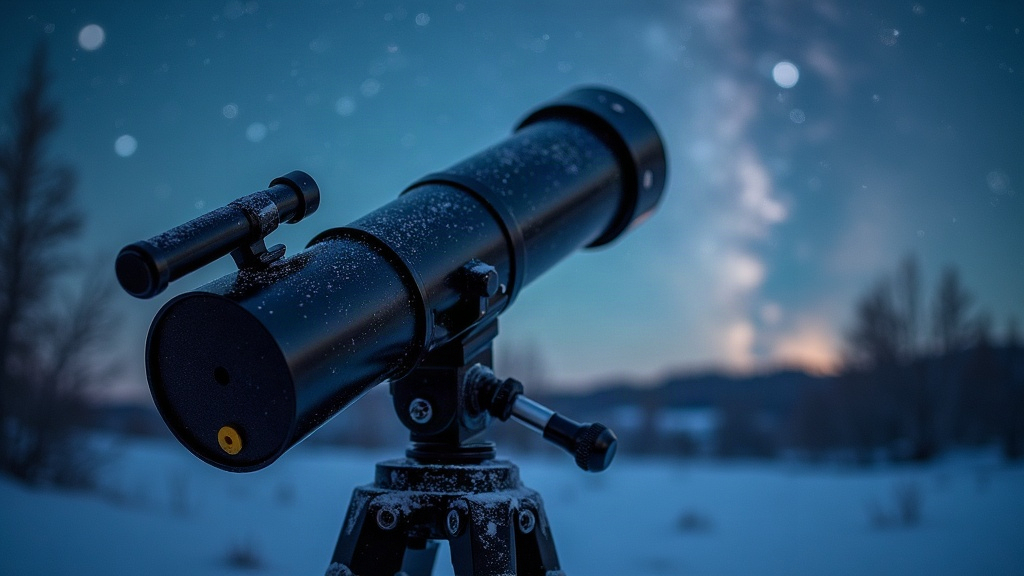
If your equatorial mount starts grinding, stalling, or just refusing to track smoothly on a freezing night, don’t panic and don’t assume the worst. In nearly every case, it comes down to one of four things: grease that’s gone stiff, a battery that can’t keep up, cables that have turned rigid, or metal parts contracting just enough to throw off the tolerances. All four are fixable, and none of the fixes cost much. Get them sorted and your mount will track at -10°C about as happily as it does on a warm August evening.
Why Cold Weather Affects Equatorial Mounts
An equatorial mount depends on precision gears, a motor (stepper or servo), and lubricated bearings working together smoothly. Drop the temperature and nearly every one of those components starts behaving differently:
- Grease thickens. The lubricant that ships with consumer mounts, think EQ3, EQ5, HEQ5, CGEM, is usually formulated for moderate conditions. Once you’re below freezing, it turns gloopy, and the motor has to fight through extra friction just to turn the worm gear.
- Batteries lose capacity. Lithium-ion packs, and plenty of lead-acid ones too, can shed 20-50% of their usable capacity in sub-zero temps. That means less current reaching the motor right when it needs more torque, not less.
- Metal contracts. A gear mesh dialed in perfectly at 20°C can tighten up noticeably at -15°C. Tolerances that felt generous in your garage suddenly feel snug outside.
- Cables stiffen. Power and USB cables lose their flex in the cold, and a stiff cable dragging on the mount head, especially near the zenith or during a meridian flip, adds resistance you wouldn’t notice in summer.
The Most Common Cause: Hardened Grease
If you had to bet on one culprit, bet on this one. Factory grease inside the RA and DEC worm gears is often just a general-purpose lubricant, never rated for serious cold, and it’s the single biggest reason mounts seize up in winter.
Fix:
- Swap out the factory grease for something cold-rated, like Nyogel 744 or a PTFE-based Superlube. Both are go-tos among astrophotographers in Canada and northern Europe who image through real winters.
- Strip the old grease completely with isopropyl alcohol first. Mixing lubricant types can actually make the problem worse, not better.
- Go thin and even. Over-greasing creates just as much drag as not greasing enough, so resist the urge to pile it on.
Weak or Cold-Soaked Batteries
Here’s a trap a lot of people fall into: the battery reads full charge indoors, then an hour outside and suddenly the mount’s acting like it’s starving for power, because it is.
Fix:
- Go with a lithium battery pack built for cold use. A good LiFePO4 pack can keep performing down to -20°C without flinching.
- Insulate it. A foam pouch, even a wrap with a hand warmer tucked in, buys you several degrees of protection and that matters more than people expect.
- Don’t run your dew heaters and your mount off the same undersized battery. Voltage sag under that combined load looks exactly like a stalling motor, and it’s an easy mistake to misdiagnose.
Cable Drag and Connector Issues
A stiff cable tugging on the mount head, particularly USB or power cables threaded through cable clips, can be just enough extra resistance to make a stepper motor skip steps or stall outright.
Fix:
- Switch to silicone-jacketed cables that stay flexible in the cold instead of the standard PVC ones, which turn almost rigid below freezing.
- Build in a drip loop and leave slack, so nothing pulls taut mid-slew.
- Check your connectors. The repeated contract-and-expand cycle through a long session can work DC barrel connectors loose without you noticing until tracking drops out.
Mechanical Tolerance and Balance
Cold contraction tightens the gear mesh slightly on its own, and if your balance is even a little off, that effect gets magnified fast.
Fix:
- Re-balance both RA and DEC axes carefully before every winter session. A touch east-heavy in RA can actually help offset the added friction.
- Don’t overtighten the clutches. A clutch that’s secure but not cranked down reduces the load the motor has to fight against.
- Give the mount 20 to 30 minutes outside to acclimate before you start imaging. It’s tempting to skip this step when it’s cold and you just want to get going, but it pays off.
Quick Winter Pre-Flight Checklist
- Re-grease worm gears with cold-rated lubricant once a year
- Use an insulated, high-capacity lithium battery
- Switch to flexible, cold-weather cables
- Re-balance the mount precisely before each session
- Let the mount acclimate before polar aligning
- Keep firmware and handset software current, some manufacturers quietly roll out cold-weather torque adjustments
Conclusion
A motor stalling on a cold night doesn’t mean your mount is broken. It almost always means a maintenance or power issue that the cold has made obvious. Switch to proper cold-weather grease, run a battery that can actually handle the temperature, upgrade your cables, and rebalance with a bit more care, and winter stalling tends to disappear for good. A little prep before the season turns means a lot more clear, productive nights once it does.