Astronomical Seeing vs Transparency: A Beginner's Guide
If you’ve ever glanced at a “clear sky chart” and noticed two separate ratings sitting side by side for the same night, you’ve already bumped into the two most important, and most commonly mixed up, concepts in amateur astronomy: seeing and transparency. They sound like they should mean roughly the same thing. They don’t. These two measure entirely different atmospheric behaviors, and confusing them is a classic way to waste a perfectly good night of observing or imaging. Below, I’ll break down what each term actually means, how you can judge them with your own eyes (no fancy gear required), and which one deserves your attention depending on what you’re pointing your scope at.
What Is Atmospheric Seeing?
Seeing is all about steadiness. Picture starlight traveling down through miles of atmosphere, passing through pockets of air at different temperatures and densities along the way. That light gets bent, nudged, and jostled, basically the same phenomenon that makes a stretch of highway shimmer and wobble on a scorching July afternoon. When seeing is bad, stars twinkle aggressively, and planets end up looking like they’re boiling in your eyepiece rather than holding still.
- Good seeing: stars sit as calm, tight pinpoints of light; planetary detail (Jupiter’s cloud bands, the thin dark line of Saturn’s Cassini Division) stays crisp and locked in place.
- Bad seeing: stars flicker and dance around; crank up the magnification on a planet and the view turns to mush, wobbly and smeared like a photo taken through running water.
Astronomers usually rate seeing on the Antoniadi scale (I being perfect, V being nearly unusable) or by measuring star image size in arcseconds.
What Causes Bad Seeing
- Jet stream activity churning high up in the atmosphere
- Heat radiating off nearby rooftops, asphalt driveways, or even your own telescope tube as it cools down
- Aiming low near the horizon, where you’re staring through a much thicker slab of air
- A temperature mismatch between your optics and the outside air (this one trips up more beginners than you’d expect)
What Is Transparency?
Transparency is a measure of clarity, essentially, how much the atmosphere dims or scatters incoming light before it ever reaches your eye or camera sensor. A few culprits drive this:
-
Humidity and water vapor hanging in the air
-
Haze, smoke, or wildfire particulates drifting overhead
-
Light pollution and plain old airborne dust
-
High-altitude clouds, including the thin, almost invisible kind you might not even notice until your faint targets vanish
-
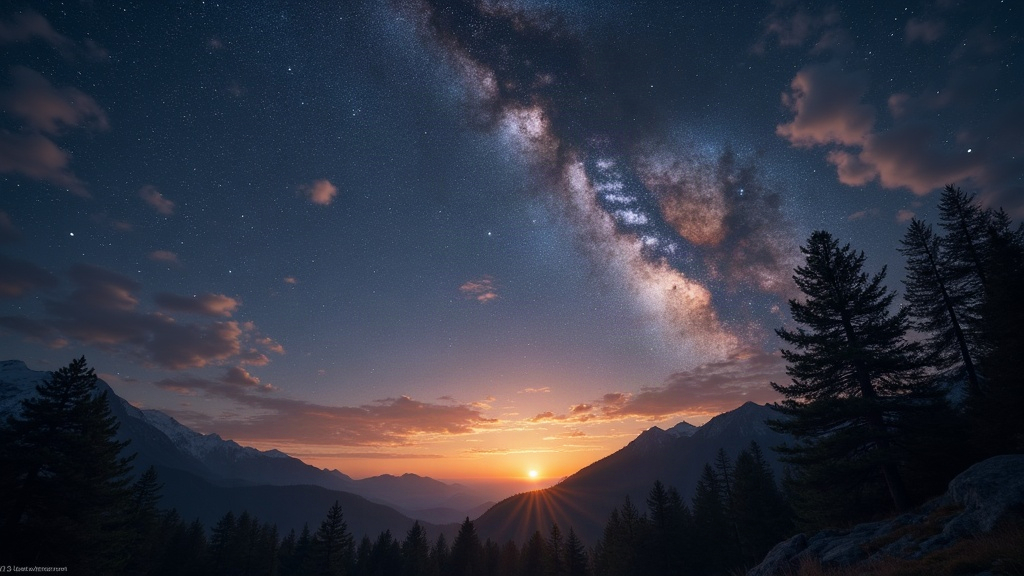
Good transparency: you can spot naked-eye stars down to magnitude 6 or fainter, and the Milky Way shows up as a visible band from a dark site.
-
Poor transparency: even the bright stars look washed out and dim, while faint fuzzies like galaxies and nebulae basically disappear into the background glow.
Seeing vs. Transparency: The Core Difference
Here’s the simplest way to keep them straight:
- Seeing = stability (is the air calm, or is it churning?)
- Transparency = clarity (is the air clean, or is it hazy?)
You can absolutely get a night with excellent seeing but rotten transparency, think calm, humid air right after a storm passes through. Or the opposite: bone-dry, crystal-clear air at ground level while the jet stream rips through higher up, scrambling your planetary views. These two factors largely operate independently of each other, which is exactly why they’re reported separately.
How to Judge Each One Yourself
Testing Seeing
- Point your telescope at a moderately bright star and defocus it slightly, just enough to see the diffraction pattern.
- Watch the rings. Calm, concentric circles mean good seeing. If they’re writhing around and breaking apart, you’re dealing with poor seeing.
- Swing over to a planet and crank up the magnification. Steady, held detail is your sign that seeing is on your side.
Testing Transparency
- Step outside and give your eyes 15 to 20 minutes to fully dark-adapt (resist the urge to check your phone during this).
- Pick a familiar constellation, say the Little Dipper, and count how many stars you can actually make out.
- Look for the Milky Way. If it’s visible as a faint band stretching across the sky, that’s a solid indicator of strong transparency.
Which One Matters More for Your Target?
- Planets and the Moon (high magnification, small bright targets): go with seeing. Even a somewhat hazy sky can deliver jaw-dropping planetary views if the air is steady.
- Deep-sky objects (galaxies, nebulae, star clusters): go with transparency. These faint, sprawling targets need dark, clean skies far more than they need a perfectly calm atmosphere.
- Double stars: good seeing is non-negotiable for splitting tight, close pairs.
- Wide-field astrophotography: transparency and minimal light pollution outweigh fine seeing here.
Quick Reference Table
| Condition | Best For | Worst For |
|---|---|---|
| Good seeing, poor transparency | Planets, Moon, double stars | Faint galaxies, nebulae |
| Poor seeing, good transparency | Deep-sky imaging, star counts | High-power planetary detail |
| Good seeing AND transparency | Everything, rare, treasure it | — |
Tools to Check Conditions in Advance
- Clear Sky Chart or Clear Outside apps (they forecast seeing and transparency as separate values, which is exactly what you want)
- Jet stream maps (a strong jet stream overhead usually spells poor seeing)
- Local humidity and haze forecasts (high humidity tends to be transparency’s worst enemy)
Conclusion
Seeing and transparency track two completely different things, and once you can tell them apart, you’ll stop showing up with the wrong expectations for the night ahead. Save the steady, calm nights for planets and double stars. Save your darkest, clearest nights for galaxies and nebulae. Check both forecasts before you drag your gear out into the cold. Give it a few sessions of practice and reading the sky this way becomes almost automatic, and you’ll notice the difference in your results almost right away.