Beginner's Guide to Observing Globular Cluster M13 with 7x35
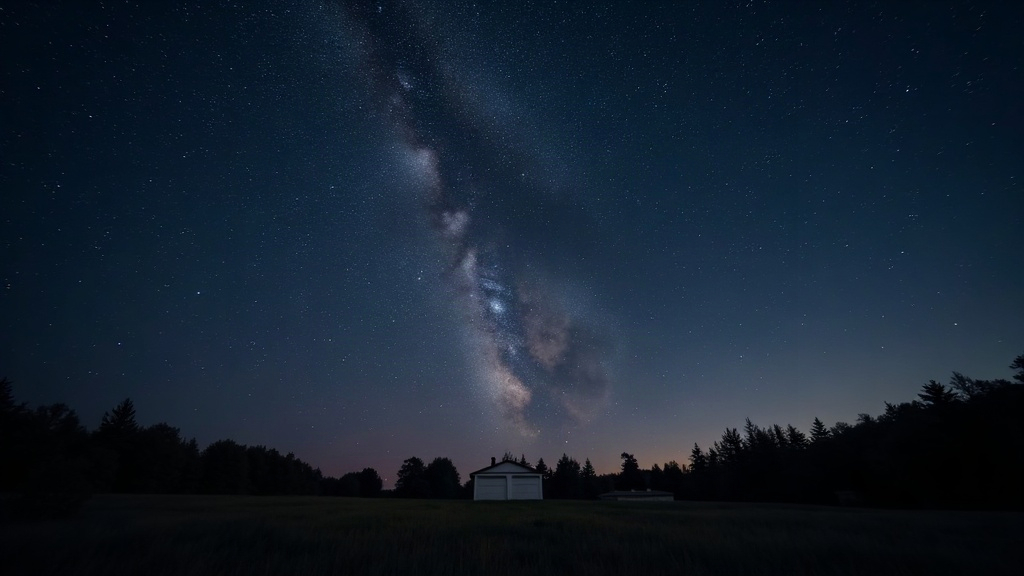
If you’ve got a basic pair of 7x35 binoculars and nothing darker than a suburban backyard, you can still bag one of the sky’s most satisfying targets: M13, the Great Globular Cluster in Hercules. Here’s exactly what to expect, when to go out, and how to track it down step by step, light pollution and all.
What Is M13, and Why Is It Worth Finding?
M13 is a globular cluster, a dense ball of several hundred thousand ancient stars sitting roughly 25,000 light-years from us. Binoculars won’t split it into individual pinpricks of light. What you get instead is a soft, fuzzy, rounded glow, clearly different from a sharp star or a faint galaxy smudge. It’s one of the brightest globular clusters you can see from the Northern Hemisphere, with a magnitude around 5.8. That’s bright enough to land within reach of modest binoculars, even in a backyard with a streetlight two houses down.
Can You Really See It with 7x35 Binoculars?
Yes, really. 7x35s are a classic beginner setup: 7x magnification, 35mm objective lenses, nothing fancy. They won’t resolve the cluster’s stars individually (for that you’d need a telescope with at least 6 to 8 inches of aperture), but here’s what they will show you:
- A small, round, slightly fuzzy patch of light
- A core that’s noticeably brighter than the surrounding edges
- A target that clearly stands apart from the ordinary field stars around it
From a suburban yard, M13 reads more like a dim cotton ball than a crisp dot of light. Forget the glossy telescope photos you’ve seen on Instagram. Managing that expectation ahead of time is honestly half the battle to enjoying the view for what it is.
When to Look
M13 is at its best from late spring through late summer in the Northern Hemisphere:
- May–June: Rises in the evening, well-placed by midnight
- July–August: High overhead in early evening, the prime window
- September: Still visible, but sinking toward the west after sunset
Pick a night with no Moon, or at most a thin crescent. Even in a suburb, a bright Moon will wash out a faint target like this one fast.
How to Find M13 Step by Step
- Locate Hercules. Look for the “Keystone,” a lopsided square made of four moderately bright stars, sitting between Vega (in Lyra) and Arcturus (in Boötes). It’s not a showy pattern, so if you’re not confident, pull up a star chart app and let it point the way.
- Identify the two stars on the western side of the Keystone: Eta Herculis and Zeta Herculis.
- Scan about a third of the way from Eta toward Zeta. M13 sits along that imaginary line, a bit closer to Eta than to Zeta.
- Use averted vision. Look slightly off to the side of where you expect the cluster rather than staring straight at it. This puts the light on the more sensitive part of your eye, and faint fuzzies like M13 tend to pop into view that way.
- Give your eyes 15 to 20 minutes to adjust to the dark. And resist checking your phone during that window, one glance at a bright screen and you’re starting over.
Tips for Suburban Skies
- Hunt down the darkest corner you have access to. Even stepping behind a garage or a tall hedge to block a single streetlight can make a real difference.
- Brace your binoculars against a fence post, a car roof, or your own arms locked against your chest. At 7x, a steady image matters more than raw magnification.
- Try more than one night. Atmospheric transparency (how clear and haze-free the air actually is) swings a lot from night to night, and it affects faint targets more than light pollution alone does.
- Let your eyes fully dark-adapt before giving up. Rushing the process is the single most common mistake beginners make.
What You’re Actually Seeing
When that small round glow finally shows up in your eyepiece, you’re looking at light that left those stars roughly around the time early humans were first figuring out agriculture. The cluster packs in an estimated 300,000-plus stars, all held together by gravity in a shape that looks smaller than the full Moon from where we stand, even though in actual size it dwarfs anything we can picture comfortably.
Conclusion
M13 is one of the best “first deep sky object” targets out there, precisely because it rewards patience over expensive gear. A star chart, dark-adapted eyes, and a plain pair of 7x35 binoculars are enough. A suburban backyard is enough. Find it once, and you’ll be amazed how quickly it becomes second nature on every outing after that.