Why Does My Telescope Show a Black Circle? (And How to Fix It)
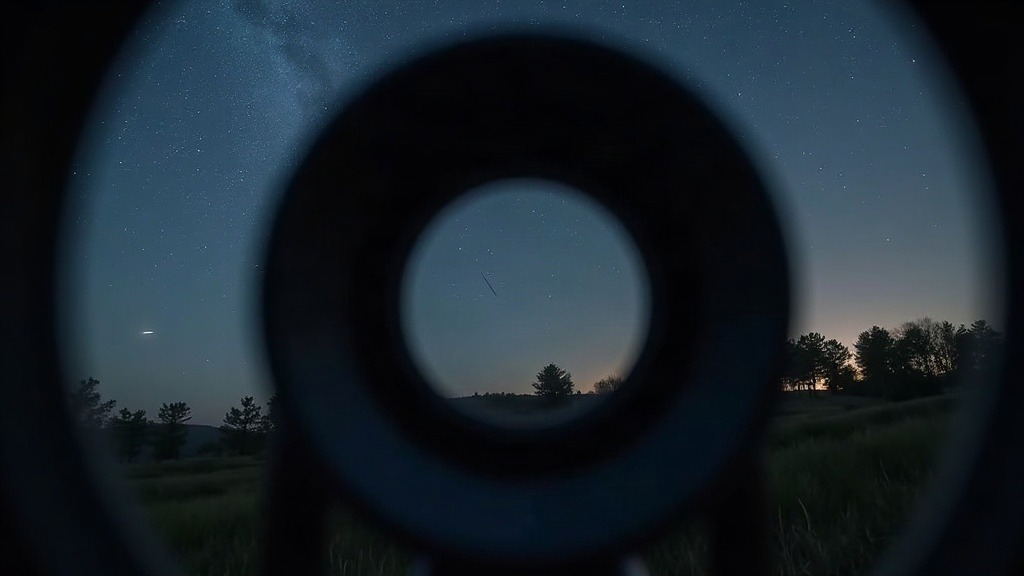
If your telescope shows a black circle instead of stars, the moon, or planets, the most common causes are an out-of-focus image, a misaligned finder scope, incorrect eyepiece placement, or looking through the wrong end of the optical path. This is one of the most frequent complaints from beginner astronomers, and honestly, the good news is that it’s almost always fixable in a few minutes without any special tools.
The Most Common Reason: You’re Simply Out of Focus
A severely out-of-focus telescope often produces a dark, blurry blob rather than a crisp star. Many beginners mistake this for a broken telescope, panic a little, and start googling return policies. No need.
Fix it:
- Point the telescope at a bright, easy target during the day, a distant rooftop, treetop, or power line, not the night sky.
- Slowly turn the focuser knob in one direction. If the image gets worse, reverse direction.
- Keep turning until the object snaps into a sharp, clear view.
Daytime focusing is far easier than trying to focus on a dim star field for the first time. Try it once on a chimney three streets over and you’ll immediately understand why.
Looking Through the Eyepiece Backward or at the Wrong Angle
A black circle can also appear if you’re not looking straight through the eyepiece. Reflector telescopes (Newtonians) in particular require your eye to be centered directly over the eyepiece’s exit pupil. Move even a few millimeters off-axis and all you’ll see is darkness, no stars, nothing.
Fix it:
- Position your eye close to the eyepiece lens, about 1 to 2 cm away.
- Center your eye directly over the opening, not off to one side.
- For telescopes with a 90° star diagonal, make sure you’re looking straight down into the diagonal, not at an angle.
Dust Cap Still On (Yes, Really)
It sounds obvious, but it’s one of the top reasons people report a “black circle” or “all black” view. Many telescopes have a small cap on the main tube and a smaller cap on the finder scope or secondary mirror cover. People check the big one and forget the small one more often than you’d think.
Fix it:
- Check the front of the main optical tube for a cap.
- Check that any smaller covers near the focuser or secondary mirror (common in Newtonian reflectors) have been removed.
Finder Scope Misalignment Confusion
Sometimes the “black circle” problem isn’t in the main telescope at all, it’s the finder scope. If the finder isn’t aligned with the main tube, you may center an object in the finder while the main eyepiece is pointed at empty sky or ground, producing total darkness in the main view. You swear you’re aimed right at Jupiter, and yet, nothing.
Fix it:
- During daylight, align the finder scope with the main telescope using a distant landmark (a church spire, a rooftop vent, anything fixed and far away works).
- Center the object in the main eyepiece first (using low magnification), then adjust the finder’s alignment screws so the crosshair matches.
Low Light or Wrong Target Area
At night, if you accidentally point the telescope at an empty patch of sky, you’ll see nothing but a dark field, which can look exactly like a black circle, especially with a high-magnification eyepiece that has a narrow field of view. A 6mm eyepiece shows you a tiny sliver of sky; miss your target by a hair and you’re staring at void.
Fix it:
- Start with your lowest-power eyepiece (highest mm number, like 25mm) for a wider field of view.
- Choose an easy, bright target first: the Moon, Jupiter, or Venus.
- Once centered, switch to higher magnification eyepieces if desired.
Collimation Issues (Mostly Reflectors)
In Newtonian reflector telescopes, if the mirrors are significantly out of alignment (miscollimated), the image can become extremely dark, distorted, or show odd black shapes or rings, especially at higher power. This one trips up a lot of new reflector owners who assume collimation is only for “advanced” users.
Fix it:
- Use a collimation cap or laser collimator to check mirror alignment.
- Adjust the primary and secondary mirror screws following your telescope’s manual.
- If you’re unsure, start with daytime collimation checks using a distant object.
Eyepiece or Barlow Lens Seated Incorrectly
A black circle can also happen if the eyepiece isn’t fully inserted into the focuser, or if a Barlow lens is attached incorrectly, blocking the light path. A loose eyepiece sitting at a slight tilt is enough to ruin the view entirely.
Fix it:
- Push the eyepiece fully into the focuser or diagonal until it seats snugly.
- Tighten the thumbscrew to hold it in place.
- Remove and reinsert any Barlow lens to confirm proper alignment.
Quick Troubleshooting Checklist
- Remove all dust caps (tube, finder, secondary mirror).
- Focus during daytime on a distant object first.
- Use your lowest-power eyepiece to start.
- Align your finder scope with the main optics.
- Center your eye directly over the eyepiece.
- Check collimation if using a reflector telescope.
Conclusion
A black circle in your telescope eyepiece is rarely a sign of a broken instrument. Nine times out of ten it’s a quick fix involving focus, eye position, dust caps, or finder alignment. Work through the checklist above during daylight hours first, and you’ll likely solve the issue well before your next clear night under the stars.