The 1859 Carrington Event: What a Modern Solar Superstorm Would Do
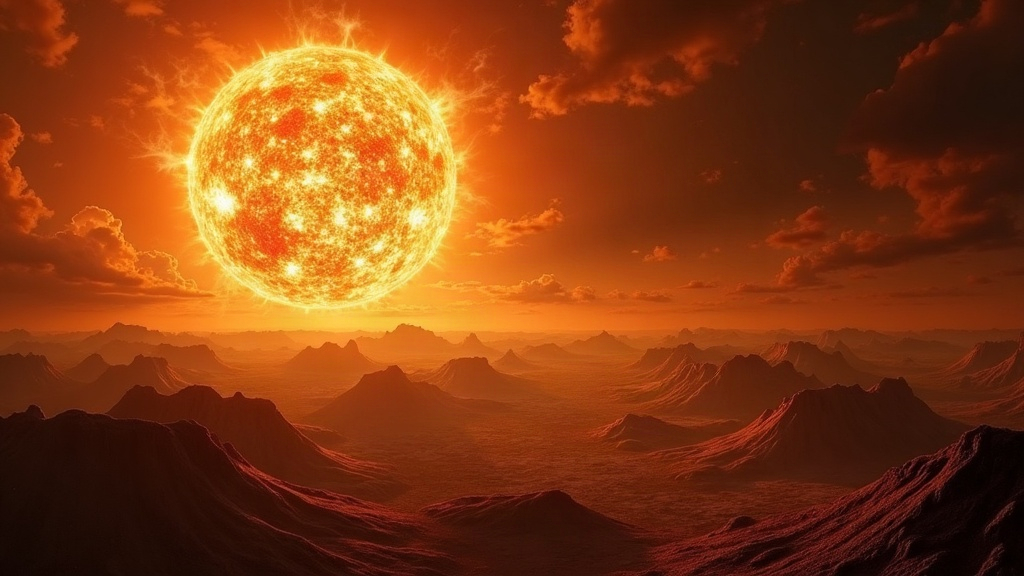
What Was the 1859 Carrington Event?
In early September 1859, British astronomer Richard Carrington was sketching sunspots when he saw something no one had documented before: a sudden, blinding white-light flare erupting off the Sun’s surface. About 17.6 hours later (compare that to the usual three or four days a solar wind cloud takes to cross space) a massive wave of charged particles slammed into Earth’s magnetic field.
What happened next still reads like fiction:
- Auroras reached the tropics. Red and green lights lit up skies over Cuba, Hawaii, Jamaica, even parts of Colombia.
- The sky glowed so bright that people in the northeastern U.S. could read a newspaper at midnight, no lamp needed.
- Telegraph systems went haywire. Operators got shocked, paper sparked and caught fire, and in a few bizarre cases lines kept sending messages even after workers unplugged the batteries. The induced current alone was enough to run the wires.
- Compasses spun wildly, throwing off ship navigation across entire oceans.
Behind all this chaos was a coronal mass ejection (CME), a billion-ton belch of magnetized plasma usually paired with a solar flare. When a CME slams into Earth’s magnetosphere, it kicks off a geomagnetic storm, and that storm can push powerful electric currents through any sufficiently long conductor sitting on the ground. In 1859, that meant telegraph lines. Today, it means everything.
How Often Do Carrington-Class Storms Happen?
Nobody has an exact number, but the consensus among researchers puts the odds of another Carrington-scale storm at roughly once every 100 to 150 years. We’ve dodged a few bullets already:
- 1989 Quebec blackout. A geomagnetic storm took down the entire Hydro-Québec grid in about 90 seconds flat. Six million people lost power, some for up to nine hours.
- 2003 Halloween storms. GPS signals scrambled, airlines rerouted polar flights on the fly, and transformers took damage in South Africa and Sweden.
- 2012 near-miss. A CME just as strong as the 1859 event ripped through Earth’s orbital path and missed us by about nine days. NASA later said that if the timing had been off by a week and a half, we’d likely have seen widespread blackouts lasting a long time.
So here’s the uncomfortable truth: modern civilization has never actually taken a direct hit from a true Carrington-class storm. We’ve just been lucky. So far.
What a Modern Solar Superstorm Would Do
Picture a Carrington-level storm hitting today’s infrastructure. Every layer of it would get tested at once.
1. Power Grids and Transformers
The biggest exposure is high-voltage transmission networks. Geomagnetically induced currents (GICs) creep into power lines and transformers, and once inside, they cause real trouble:
- Transformer overheating and permanent damage. These aren’t off-the-shelf parts. Large high-voltage transformers are custom-built, often overseas, and replacing one can take 12 to 24 months.
- Cascading blackouts. One region trips offline, the load shifts to the next, and suddenly you’ve got a continent-wide failure spreading like dominoes.
- Voltage collapse within minutes. Quebec proved this in 1989: 90 seconds from stable grid to total blackout.
2. Satellites and GPS
Satellites have no atmosphere to hide behind, so they’d face a one-two punch: charged particles frying electronics, plus an expanded atmosphere that adds drag and drags satellites off their intended paths (or out of orbit entirely). Lose GPS, even partially, and the ripple effects hit banking, aviation, farming equipment, shipping routes, and even the timing systems that keep cell towers synced.
3. Communications and the Internet
Fiber-optic cables themselves carry light, not electricity, so they’re mostly safe from induced currents. The weak link is everything that powers them: repeaters, amplifiers, and undersea cable power systems. Knock enough of that infrastructure out and you could fragment the internet across entire regions for weeks.
4. Aviation and Navigation
High-frequency radio, the backbone of transpolar flight communication, can go dark entirely during a severe storm. That forces expensive rerouting decisions in real time. And radiation levels at flight altitude climb too, raising genuine health concerns for crew and passengers on those polar routes.
Can We Predict and Prepare?
Nobody can stop a solar superstorm. But we’re not helpless either. NOAA’s Space Weather Prediction Center and the UK Met Office track the Sun continuously, using satellites like DSCOVR, parked about a million miles sunward of Earth. That positioning buys us 15 to 60 minutes of warning once a CME actually launches toward us. Not much, but enough to matter.
Real preparedness looks like this:
- Hardening transformers and adding GIC-blocking devices at the substations most exposed to risk.
- Pre-staging replacement equipment so a fried transformer doesn’t sideline a region for two years.
- Contingency plans letting grid operators deliberately disconnect sections of the network to stop a cascade before it spreads.
- Backup navigation systems for aviation and shipping that don’t collapse the moment GPS does.
For individuals, the advice isn’t exotic, it’s the same stuff you’d do for any extended outage. Keep some cash around (ATMs and card networks could go down). Store water and food that doesn’t need refrigeration. And keep printed copies of anything critical, phone numbers, documents, maps, in case the internet and cell networks both go quiet at once.
Conclusion
The 1859 Carrington Event showed exactly what the Sun is capable of doing to a world running on telegraph wires. A modern solar superstorm would throw the same physics at a planet that now runs on electricity, satellites, and the internet, only this time the stakes are exponentially higher. The threat is real, but it’s not unmanageable. What separates a rough week from a months-long crisis comes down to three things: early warning, hardened infrastructure, and honest planning instead of wishful thinking. The Sun is going to erupt again. That part isn’t in question. How ready we’ll be when it does, that’s the part still up to us.