Best Magnifications for Splitting Tight Double Stars (100mm Refractor)
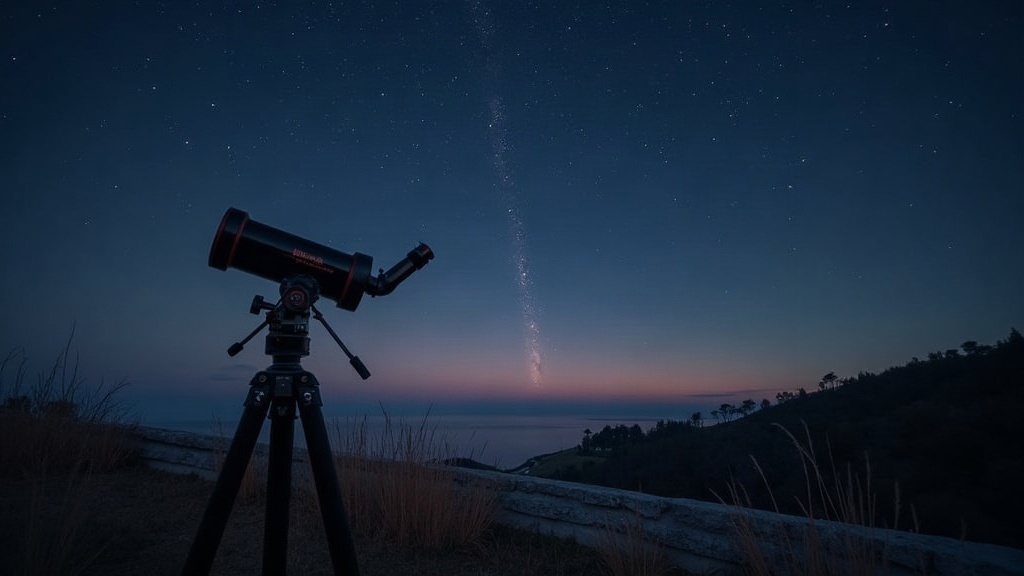
Splitting Tight Double Stars with a 100mm Refractor: Finding the Right Magnification
Splitting tight double stars with a 100mm (4-inch) refractor is one of the more satisfying tests you can throw at your optics, and honestly, at your own patience too. The single biggest variable in whether you succeed is magnification. For most tight pairs, you’ll want to push somewhere between 200x and 300x (roughly 2x to 3x the aperture in millimeters), while the theoretical resolution limit of a 100mm scope sits around 1.16 arcseconds, courtesy of the Dawes formula.
Why Magnification Matters So Much for Double Stars
Unlike deep-sky observing, where wide fields and low power usually win the day, double star splitting lives and dies by resolution, not brightness. A 100mm refractor has a hard ceiling built into its optics. It simply cannot separate stars closer than its diffraction limit, no matter how aggressively you crank the power. But here’s the catch: if you don’t magnify enough, your eye won’t register a separation the optics are already resolving. The information is there on the focal plane; your retina just can’t read it yet.
That’s why double star observers work from a different playbook than deep-sky folks:
- Deep-sky max useful power: ~1.5–2x aperture (mm), so 150–200x on a 100mm scope
- Double star max useful power: ~2.5–3x aperture (mm), sometimes more in excellent seeing, meaning 250–300x on that same 100mm scope
Calculating the Dawes and Rayleigh Limits for a 100mm Refractor
- Dawes limit: 116 / aperture (mm) = 116 / 100 = 1.16 arcseconds
- Rayleigh limit: 138 / aperture (mm) = 1.38 arcseconds
These figures are the theoretical floor, the closest you could ever split a pair of equal brightness stars with flawless optics under flawless skies. In the real world, most observers need magnification noticeably above that bare minimum just to comfortably perceive the split. Think of Dawes as the line on paper; your eye needs a bit of a running start to actually cross it.
Recommended Magnification by Separation
Here’s a practical table drawn from real observing sessions with 100mm apochromatic and achromatic refractors:
| Separation | Difficulty | Suggested Magnification |
|---|---|---|
| > 5” | Easy | 80x–120x |
| 2”–5” | Moderate | 120x–180x |
| 1.2”–2” | Tight | 180x–250x |
| Near Dawes limit (~1.2”) | Very tight | 250x–300x+ |
Once you’re working near or below the Dawes limit, you’re pushing right up against what the aperture physically allows. No amount of extra magnification rescues a bad night at that point. Seeing becomes the deciding factor, full stop.
Eyepiece Choices to Hit These Powers
Assume a 100mm f/7 to f/9 refractor, so a focal length somewhere around 700mm to 900mm. Here’s how to land in the target range:
- 4mm–6mm eyepiece: Puts you in the 150x–225x zone on an f/9 scope. Solid for moderate splits, like checking off Epsilon Lyrae on a decent night.
- 2.5mm–3mm eyepiece, or a 2x/3x Barlow paired with a longer eyepiece: This is your route to 250x–300x+ for the genuinely tight pairs.
- Orthoscopics and Plössls are still the go-to choices for this kind of work. Their high contrast and minimal internal reflections let you pick out a faint companion sitting uncomfortably close to a bright primary.
- Skip the ultra-wide-field eyepieces here. All those extra lens elements scatter light and chip away at contrast, which is exactly the resource you can’t afford to lose.
Why Seeing Conditions Trump Raw Magnification
You could own the sharpest 100mm apo on the planet, and atmospheric turbulence (what astronomers call “seeing”) will still cap what you can actually resolve on any given night. A few things that genuinely help:
- Let the scope thermally acclimate for 30–45 minutes before chasing tight splits. A tube still shedding heat will blur even an easy pair.
- Observe targets high in the sky, above roughly 40–50° altitude, to cut down the amount of turbulent atmosphere your light has to punch through.
- Hunt for nights with steady, if not perfectly transparent, skies. A slightly hazy but calm night beats a crystal-clear but boiling one, every time, for this particular task.
- If a star looks like a wobbly figure-8 or an elongated smear instead of two crisp points, don’t give up yet. Bump the magnification by 25–50x first and see if it resolves.
A Few Classic Test Doubles for a 100mm Refractor
- Epsilon Lyrae (the “Double Double”): about 2.3” separation, a nice benchmark around 150x–200x.
- Zeta Boötis: roughly 1” separation, a real stress test that sits right near the Dawes limit.
- Gamma Andromedae: wide, colorful, and easy even at 100x. Good for calibrating your eye before you go after anything tighter.
Final Thoughts
For a 100mm refractor, the sweet spot for splitting tight double stars generally falls between 200x and 300x, climbing toward the top end as separations approach that 1.16” Dawes limit. Pick eyepieces that land you in this range, favor simple, high-contrast designs over wide-field glass, and never underestimate atmospheric seeing. It often matters more than the extra 50x of magnification you’re tempted to throw at the problem. Get the power dialed in and wait for a steady night, and a 100mm refractor can confidently resolve pairs well under 2 arcseconds, no exotic equipment required.